Know exactly what's in your home's dust.
Certified in-home lead dust testing with lab-verified results. Serving Philadelphia, PA and surrounding neighborhoods.
- Results in
- 3–5 days
- Visit time
- ~45 min
- Homes tested
- 1,000+
Services & pricing
Flat pricing by bedroom count with independent AIHA-accredited lab analysis. Optional add-ons listed below.
Studio Apt
$99
Dust wipe sampling for a studio apartment.
- AIHA-accredited lab analysis
- Digital report in 3–5 days
1 BR
$160
Dust wipe sampling for a one-bedroom home.
- AIHA-accredited lab analysis
- Digital report in 3–5 days
2 BR
$180
Dust wipe sampling for a two-bedroom home.
- AIHA-accredited lab analysis
- Digital report in 3–5 days
3 BR
$205
Dust wipe sampling for a three-bedroom home.
- AIHA-accredited lab analysis
- Digital report in 3–5 days
4 BR
$230
Dust wipe sampling for a four-bedroom home.
- AIHA-accredited lab analysis
- Digital report in 3–5 days
5 BR
$280
Dust wipe sampling for a five-bedroom home.
- AIHA-accredited lab analysis
- Digital report in 3–5 days
Add-ons
Optional services you can add at booking or after your report.
Retest
$75Re-sampling after remediation or a failed result.
Rush fee
$50Priority lab turnaround — results in 24–48 hours.
City upload
$75Report filed with the City of Philadelphia on your behalf.
Contact us about discounts for multiple units, or for homes larger than 5 BR.
How it works
Book online
Pick a date and time that works — no phone tag.
We sample your home
A certified technician collects wipe samples in ~45 minutes.
Independent lab analysis
Samples are analyzed by an AIHA-accredited laboratory.
Clear digital report
You get a plain-language report with next steps in 3–5 days.
Watch the sampling process
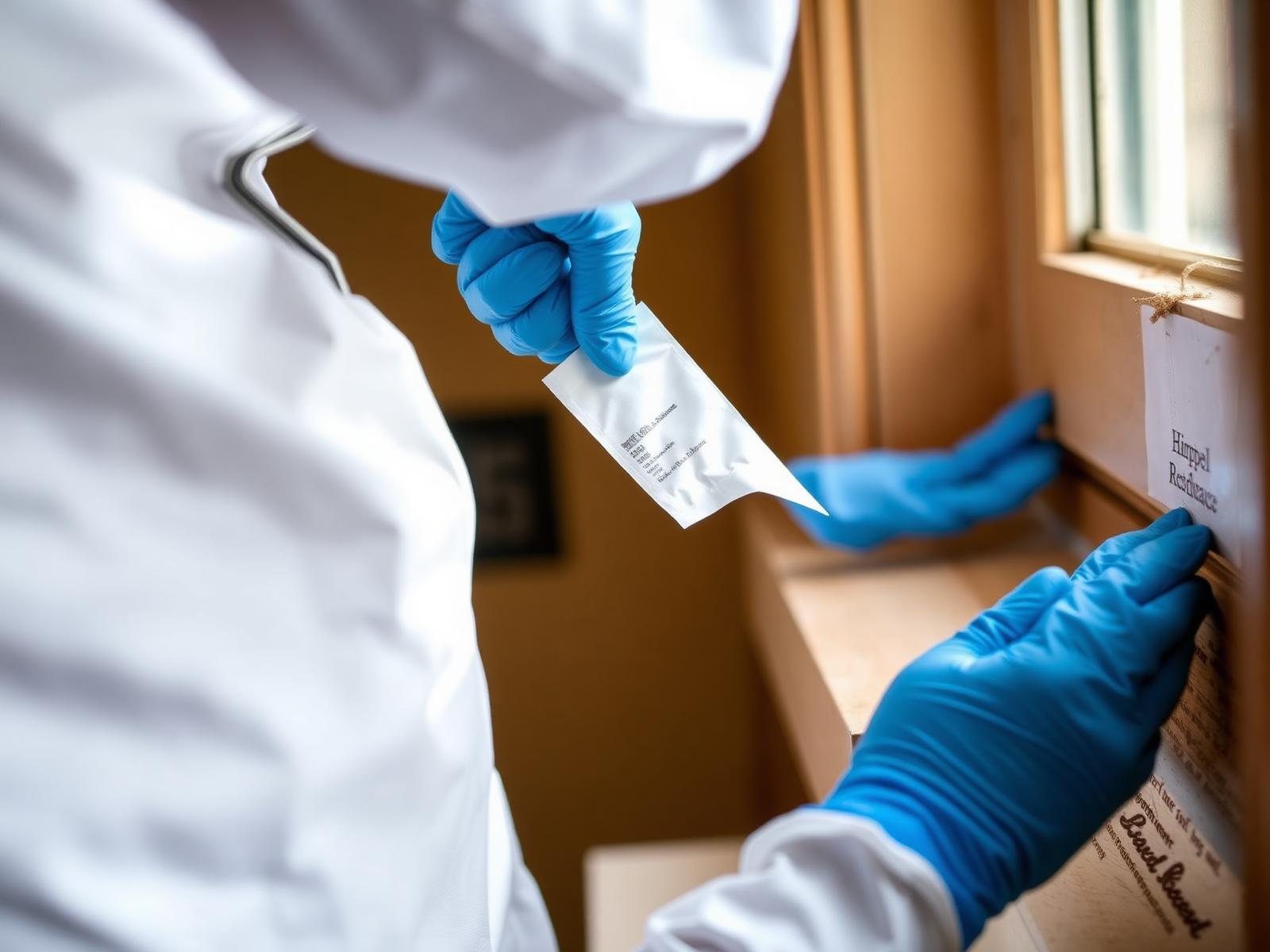
A short walkthrough of how we collect lead dust wipe samples — templated surface, sterile wipe, sealed and labeled for the lab. No demolition, no mess, usually done in under an hour.
Illustrative walkthrough of a standard EPA-style dust wipe collection.
Based in Philadelphia, PA
We serve homeowners, renters, landlords, and daycares across every Philadelphia neighborhood. Philly's rowhome stock skews pre-1978, which makes routine dust testing especially important here.
- Coverage
- All of Philadelphia County
- Travel fee
- None within city limits
- Nearby suburbs
- Available on request*
- ZIP codes
- 19102–19154 · Same-day service available for most 191xx ZIP codes
*Bala Cynwyd, Cheltenham, Upper Darby, Camden waterfront, and other PA/NJ areas within ~15 miles — a small travel fee may apply. Ask when booking.
Neighborhoods we cover
- Center City
- South Philly
- Fishtown & Kensington
- Northern Liberties
- Fairmount & Brewerytown
- West Philly & University City
- Manayunk & Roxborough
- Germantown & Mt. Airy
- Chestnut Hill
- Northeast Philly
- Port Richmond
- Point Breeze & Grays Ferry
Philadelphia's Lead Safe law is mandatory for landlords
Under Philadelphia's Lead Disclosure and Certification Law, every residential rental unit in the city must be certified lead free or lead safe before a new tenant moves in — and at every lease renewal. Lead safe certification requires dust wipe sampling by a certified inspector, which is exactly what we do.
What's required
- Dust wipe testing by a certified lead inspector/risk assessor
- Lead safe or lead free certificate filed with the Dept. of Public Health
- Certificate + EPA lead pamphlet given to tenants and attached to the lease
- Re-certification on the city's schedule (lead free is permanent)
Who it applies to
- All Philadelphia residential rentals, citywide
- Rowhomes, apartments, and multi-unit buildings
- Child care facilities and pre-K programs
- Required at new tenancy and at lease renewal
Penalties for non-compliance
- Code violation fines per unit, per violation — and per day they continue
- Rental license suspension, revocation, or denial of renewal
- Inability to collect rent or pursue an eviction while non-compliant
- Tenant complaints, rent escrow, and Licenses & Inspections enforcement
We handle sampling, lab analysis, and the city upload add-on so your certificate gets filed correctly. This page is general information, not legal advice — confirm current requirements with the Philadelphia Department of Public Health.
Lead dust is invisible — and it's the #1 way kids are exposed.
If your home was built before 1978, dust from window sills, floors, and door frames can carry lead particles small enough to inhale or ingest. There is no safe blood level for children.
- Homes built before 1978 are highest-risk.
- Renovations, sanding, and friction surfaces release lead dust.
- A wipe test is the only reliable way to detect it.
- Early detection prevents costly remediation later.
Book your sampling
Pick a date and time. Payment is due after booking via CashApp, PayPal, Venmo, or Zelle — details appear on the confirmation screen.
Frequently asked
What areas do you serve?
We're based in Philadelphia, PA and cover every neighborhood in Philadelphia County with no travel fee. Nearby PA and NJ suburbs within about 15 miles are available on request — a small travel fee may apply.
Is dust wipe sampling disruptive?
No. It takes about 45 minutes and uses pre-moistened wipes on hard surfaces. You can stay home during the visit.
What lab do you use?
All samples are analyzed by an independent AIHA-accredited laboratory. You receive lab-signed results directly in your report.
What happens after testing?
Once your samples pass under the EPA standards adopted by the City of Philadelphia, you'll receive three things: a Lead Safe Certification, the full laboratory results, and step-by-step instructions for filing your certification with the Philadelphia Department of Public Health and renewing your rental license in the Eclipse system.
What do the payment options cost?
Nothing extra — CashApp, PayPal, Venmo, and Zelle are all accepted at the listed price. Payment is due after booking.
Do Philadelphia landlords have to test for lead?
Yes. Philadelphia's Lead Disclosure and Certification Law requires residential rental units to be certified lead free or lead safe before a new tenant moves in and at lease renewal. Lead safe certification is based on dust wipe sampling by a certified inspector.
What happens if a landlord doesn't comply?
Non-compliance can bring code violation fines per unit and per day, rental license suspension or revocation, and the inability to collect rent or pursue an eviction until the property is certified. Tenants can also file complaints with Licenses & Inspections.
Do I need to test if my Philly rowhome was built before 1978?
Almost certainly yes. Most Philadelphia rowhomes pre-date 1978, and friction points like windows and doors are common lead-dust sources. Testing is the only way to know your levels.
Do I need to test if my home is newer than 1978?
Risk is lower but not zero — imported goods, renovations, and shared water lines can still introduce lead. When in doubt, test.